After finishing the dawn(Fajr) prayers, tossing in bed to catch some sleep that refused to come, my irritation knew no bounds when, from a far-off distance, the sound of stones being cut echoed through the roof from our backyard.
I knew what it was; irritated, I quickly rose from my bed and went straight to the source of the sound.
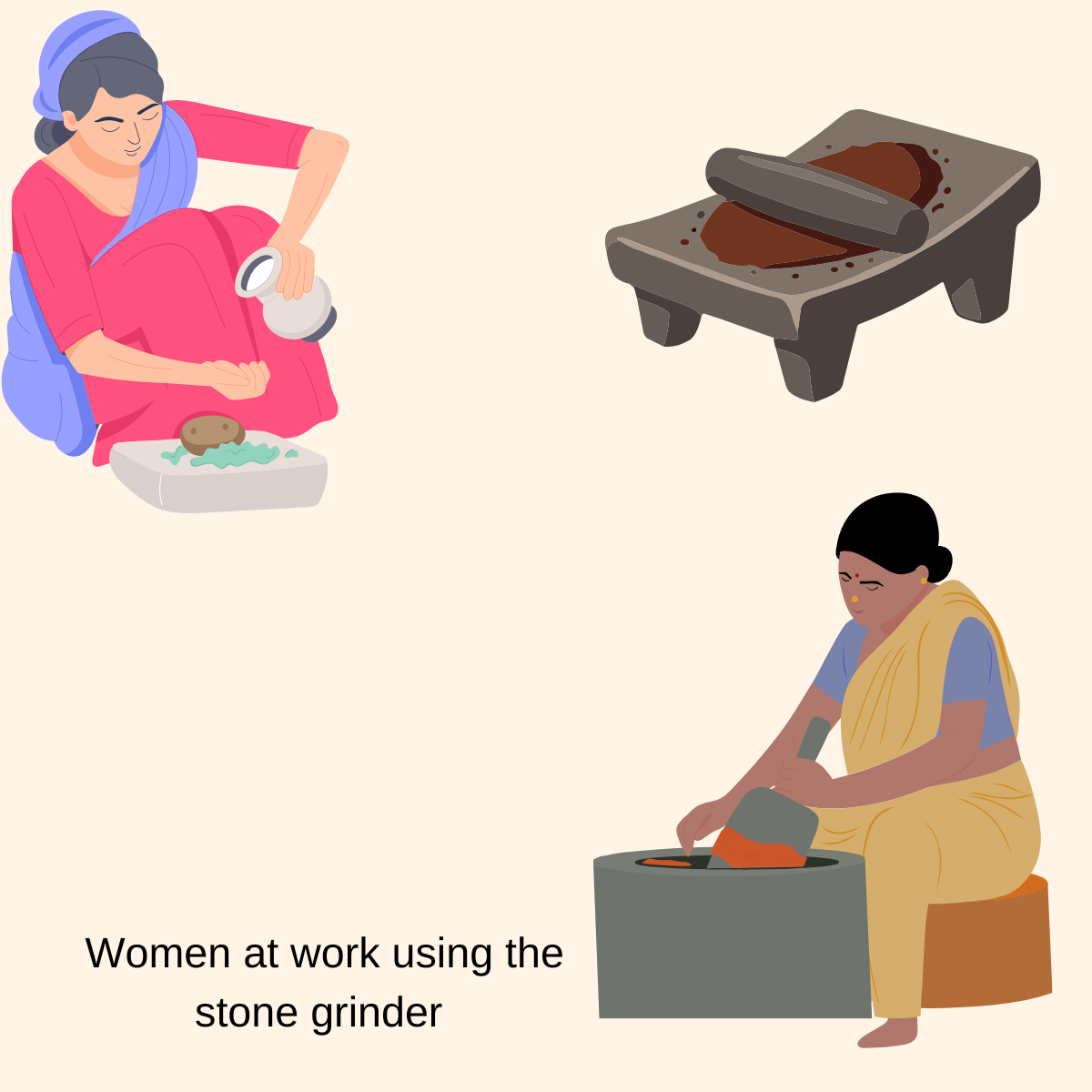
The stone-cutting woman was seated there, making deeper cuts into the huge stone attached to the motor of a commercial grinder used to grind spices for large-scale cooking.
I made a futile attempt to explain that the noise was disturbing my sleep and to come at a later hour; in the meantime, the watchman had arrived and started to drag her out, while she remained adamant, refusing to budge, despite his harsh tone and unkind drag by the shoulder.
I intervened and stopped the watchman, to which he replied that she had barged into the house without permission, started working all by herself, and now demands money for the work done. I could see the desperation all over her and the hope that she could demand money only if she got the work done.
The woman was in her early 60s, tall for the height women generally are, with an assertive presence; her hands were rough with years of work cutting stones. Her face was worn, perhaps from the quest for a livelihood that had pushed her to desperate measures, including barging through an open gate without permission and working in hopes of being paid for services not sought.
Indian society has always been organised around occupation, with occupation as the locus of division, so much so that several societal norms and divisions, including core fundamental rights and duties, arose from the gap and deprivation it created for many.
Long before huge concrete cutters were introduced in the construction industry, many would rely on the stone-cutter community known as Vaddar to do the job. I assume she could be one of the last people who knew the skill and had the experience; however, with new, advanced machines, both the supply and the demand curves have declined, with individuals being called on demand for those using stone tools.
I came back, and her face was still in my head with countless questions around occupation and loss. I asked my mother why they are called Vaddar, with limited knowledge about their origin; all my mother remembered was that they would drape sarees around and wear them without a blouse- something she grew up seeing them do when her house was under construction; this was around seven decades ago.
Many years passed, and I didn’t see the woman again; then, a few weeks back, she was back at her job. This time, she looked more frail and retired, as if she had given up on the quest. When I saw her wearing a torn petticoat over a withered saree, I gave her two new sarees and some money.
This might not have changed her condition, but I hope my modest help could have brought temporary relief to the many aching parts of her life.
While she was leaving, I stood watching her walk with a gait, as if never to return.
A week ago, I learnt she passed away, perhaps into the oblivion of where she came from.
I keep revisiting this story every time I find myself too caught up in thoughts of getting things done, so that I remind myself of the lesson:
Be it a challenge in life or evolving occupations, everything is in a state of annihilation, fleeting to meet its finality.
Warmly,
Mehnaz Amjad
Leave a Reply