In our last month’s edition, I shared a story of the Orange pastry, which, as trivial as the flavor of an Orange pastry, made me relook and reset, and find my purpose.
Continuing on our “Journey of Self ” to find our purpose and a way out from burnout & being Resilient. Today, I come to you with another key, but a hidden emotion in the total chain that’s usually present but often neglected due to a lack of awareness and hence not dealt with the right way.
Which is? Grief.
If I ask you, ‘What is Grief?’
You may take a few seconds, but your mind may immediately conjure up memories of attending someone’s funeral or a memory of personal loss of someone close to you.
And, the very next thing you may want to do is to skip this conversation altogether.
However, what many of us are not aware of is that Grief is not confined to death alone.
Grief is the natural response to loss. It’s the mix of emotions, thoughts, and changes we go through when something or someone important is no longer with us. While it’s most often linked to death, grief can arise from many kinds of losses—relationships, health, identity, dreams, or stability.
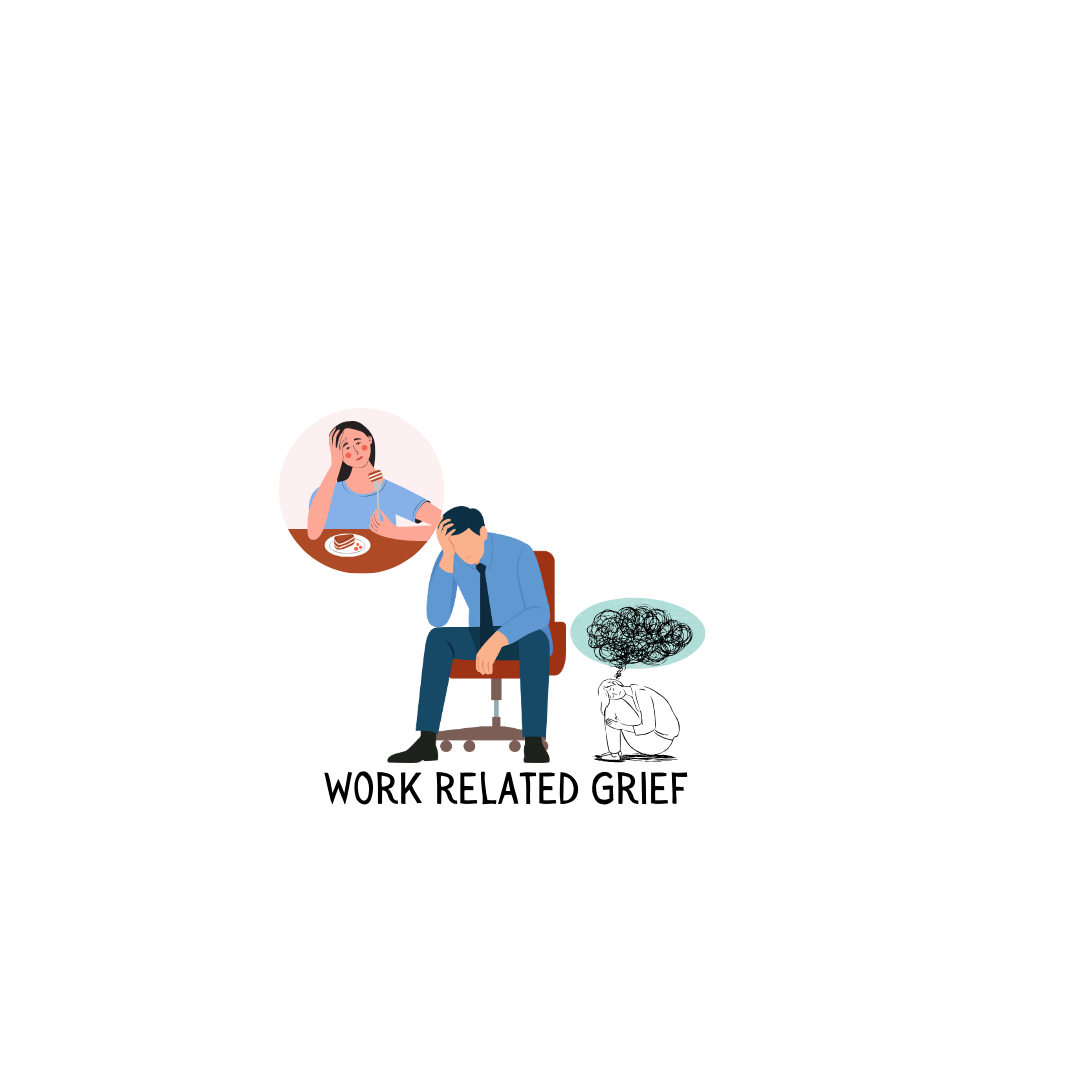
Personally, we may grieve the loss of a loved one to death, but how about the office?
Do you know that a change of leadership can cause grief? A mentor or boss, who once was your pillar of support, has now resigned and left.
A team you once led and nurtured is now dismantled, and with it came a tyrant and his team. As a result, work life has never been the same.
How about losing one’s job due to bad economic conditions, or losing an identity stemming from organisational restructuring, mergers, or new leadership with a vision and values to which we don’t find ourselves aligned?
We all experience grief in the workplace, too, but when we wear that emotional mask of hiding it in some remote corner of our mind, here’s where we put ourselves on the path to emotional exhaustion.
Emotional Exhaustion & Purpose.
If you are experiencing emotional exhaustion and feel you have lost your purpose, here’s what you can do:
Step 1 – Review the list below, which outlines the most common work-related grief events.
- A colleague has passed away
- Layoffs, downsizing, or organisational restructuring
- Retirement of a long-time coworker
- Closure of a project, office, or even the organisation itself
- Demotion
- Change of role from Team leader to Individual contributor
- Dismantling the team you once led.
Step 2 – Circle the one that you have recently experienced
Step 3 – Reflect on the point you have circled(reflect and write down your thoughts, how you felt when you experienced work-related Grief)
Step 4 – When you reflect, check if it is also a trigger point, since when you started to feel exhausted?
Step 5 – Decide on one action you can do today to deal with your complex emotion before it exhausts you.
Remember, Grief is also an emotional state, and a complex one; work-related grief is more than just events—it’s part of your identity, community, and stability.
Unless you process it, there is no way out.
In short, grief is the mind and heart adjusting to a reality without something—or someone—that mattered.
Present-day Workspace
There are two ways we carry grief back into the work.
- Type 1: When we experience personal loss and after a bereavement leave, we return to work with our emotional baggage
- Type 2: when we experience work-related grief and we mask it and hide it, repress it and eventually burn out.
I have experienced both types and also remained stuck in it for the longest time, because I had no resources or support that could assist me in finding a way out.
The truth is, we need support to process our emotional space for both types.
While we are making strides with technology and advancements in most spheres of workspaces, we still do not have such mature workspaces that support us when we are going through losses of workplace identity, demotion, or job loss; leaving many of us in a state of overwhelm, confusion, and eventual burnout.
I, as a Coach, holding a first-hand experience of it, have designed “Journey of Self “ to assist you not only to learn the correct way of dealing with this complex emotion, but to find your clarity and next steps with direction
This is not counselling or therapy—it’s a deep, transformative coaching program designed for someone just like you. Click here to book your clarity call, and if possible, share the link with someone who may also benefit from this journey.
More Power to you
Warmly
Mehnaz Amjad
Grief is not a sign of weakness, but proof of love. Healing begins the moment you allow yourself to feel, and step by step, you discover strength you never knew you had.

Leave a Reply